
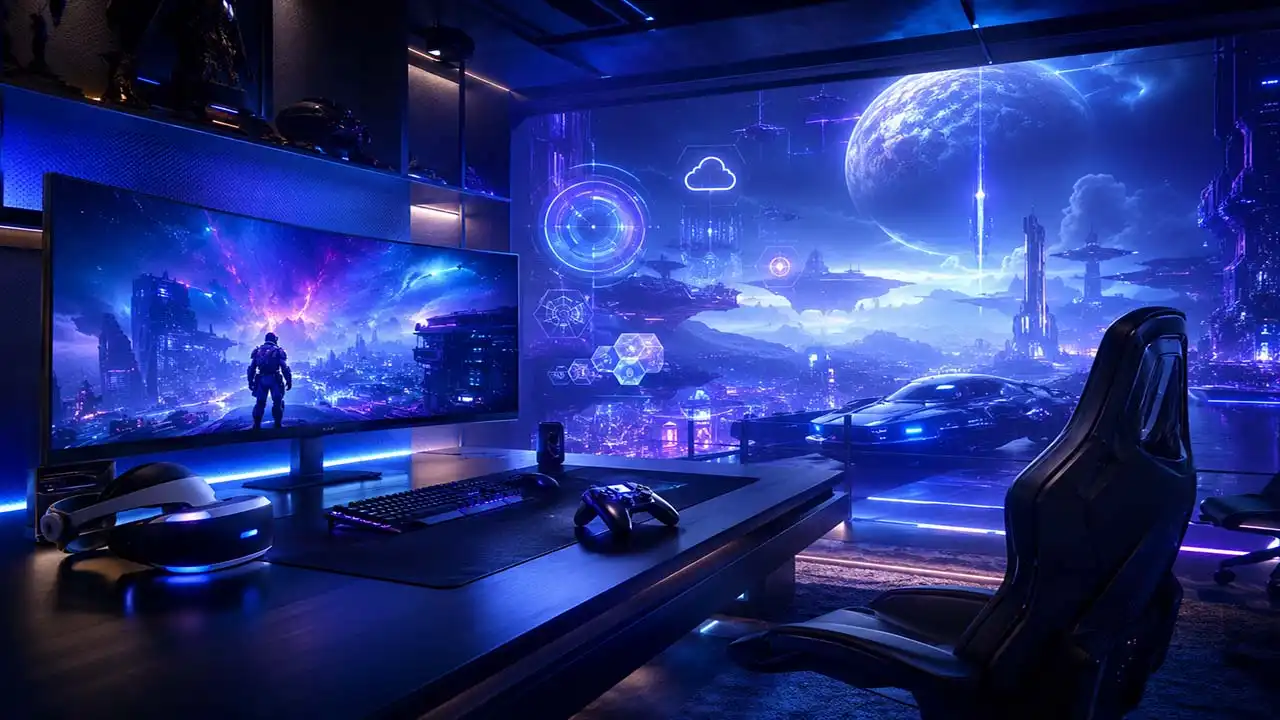
The gaming industry never stands still, but 2026 could be the year when several long-developing trends finally become part of the mainstream. From smarter AI systems to more flexible ways to play, the future of gaming in 2026 looks less like a distant concept and more like the next logical step for the entire industry.
For players, that means easier access, more immersive worlds, and better personalization. For developers and publishers, it means changing business models, faster production pipelines, and stronger competition across platforms. In other words, gaming trends in 2026 will not only affect what we play, but also how games are made, sold, and supported.
Here are six major predictions that could define the future of gaming in 2026.
1. AI Will Move Beyond NPC Dialogue
One of the biggest conversations around the future of gaming in 2026 is the growing role of artificial intelligence. Most people immediately think of AI-powered NPCs, and yes, smarter characters will absolutely become more common. We are likely to see NPCs with more reactive dialogue, more believable behavior, and a stronger ability to respond to player actions in natural ways.
But the real shift will go much further than conversation systems. AI in gaming will increasingly support quest design, mission variation, adaptive tutorials, enemy behavior, and even in-game personalization. Instead of every player receiving exactly the same pacing, challenges, or guidance, many games may start adjusting parts of the experience dynamically.
For gamers, this could make worlds feel more alive. For studios, it could reduce repetitive design work and speed up production. That is why AI is not just a feature trend—it is one of the foundations of the future of game development.
2. Cloud Gaming Will Become More Practical, Not Just More Popular
Cloud gaming has been “the next big thing” for years, but 2026 may be the point when the technology starts feeling genuinely convenient for a larger audience. Better internet infrastructure, lower latency, and improved compression will make cloud gaming in 2026 more stable than before.
That does not mean consoles and gaming PCs will disappear. Instead, cloud gaming will become a strong parallel option. Players may still prefer local hardware for competitive titles or the best graphical quality, but many will use cloud services for flexibility—switching between TV, laptop, tablet, and mobile without losing progress.
This is one of the most important gaming trends in 2026 because it changes access. If more players can run demanding games without buying expensive hardware, publishers will have a larger potential audience. That shift could reshape how games are distributed, marketed, and monetized.
3. Cross-Platform Ecosystems Will Matter More Than Exclusive Hardware
For years, gaming discussions were dominated by platform wars. In 2026, the industry may move even further away from that mindset. The biggest publishers are increasingly focused on ecosystem reach, not just hardware lock-in. That means more cross-play, more cross-progression, and more account-based gaming experiences that follow players everywhere.
In practical terms, the future of gaming in 2026 may feel less tied to one box under your TV. A player might start a game on console, continue on PC, and check progress later on a handheld or streaming device. What matters is continuity.
This trend is especially important because user expectations have changed. Modern players do not just want games; they want convenience and freedom. As a result, next-gen gaming technology is not only about graphics or frame rates. It is also about seamless access across platforms.
4. VR and AR Will Focus on Better Design, Not Just Better Hardware
VR and AR still have major growth potential, but the most important development in 2026 may not be a dramatic hardware revolution. Instead, the next phase could be about refinement: lighter headsets, better display clarity, stronger battery life, and more comfortable long-session use.
More importantly, developers are getting better at designing for immersive systems. The VR gaming evolution is no longer only about proving that virtual reality works. It is about creating games that are worth spending time in. That means stronger gameplay loops, deeper progression, and less dependence on novelty.
AR could also become more relevant if devices become less intrusive and more socially acceptable in everyday life. While mainstream AR gaming still faces challenges, the broader direction remains clear: immersion will continue expanding. In the future of gaming in 2026, immersion will be measured not only by visual quality, but by how naturally players interact with digital worlds.
5. Game Development Will Get Faster With AI-Assisted Production
Another major shift in the future of game development is how games are actually built. AI-assisted workflows are already starting to influence coding, concept iteration, animation support, voice prototyping, and asset production. By 2026, these tools could become part of the normal pipeline for both indie studios and major publishers.
This does not mean AI will replace creative teams. Instead, it will likely remove some of the slowest and most repetitive production tasks. That could help smaller teams build more ambitious projects and help larger teams reduce development bottlenecks.
For players, the impact may show up as faster updates, better post-launch support, and more experimental ideas reaching the market. For the industry, it means production efficiency could become a major competitive advantage. That is a crucial part of the future of gaming in 2026 because it changes not only the final product, but the entire process behind it.
6. Players Will Demand More Value, Not Just Bigger Games
For a long time, game marketing focused on scale: bigger maps, more content, longer campaigns, and live-service roadmaps stretching for years. But one of the most meaningful gaming trends in 2026 could be a shift in player expectations. Audiences are becoming more selective. They do not just want bigger games—they want better value.
That value can mean different things: polished single-player experiences, fair monetization, meaningful updates, or multiplayer games that respect player time. After years of aggressive live-service strategies, many players are more cautious about unfinished launches and content models that feel too demanding.
As a result, 2026 may reward studios that focus on quality, clarity, and trust. This could open the door for both premium blockbuster releases and smart mid-budget games that deliver a strong experience without endless padding. In that sense, the future of gaming in 2026 may be defined not by excess, but by better alignment between what studios make and what players actually want.
Final Thoughts
The future of gaming in 2026 is not about one single breakthrough. It is about several trends maturing at the same time. AI in gaming, cloud gaming in 2026, VR gaming evolution, cross-platform ecosystems, and faster development pipelines are all moving the industry toward a more flexible and player-focused future.
Some of these changes will be more visible than others, but together they point to a simple conclusion: gaming is becoming more connected, more adaptive, and more accessible. For players, that is exciting. For developers and publishers, it means the next phase of competition will be shaped by innovation, usability, and trust.
If current momentum continues, gaming trends in 2026 will not just change what games look like. They will change what players expect from the medium itself.
FAQ
What is the future of gaming in 2026?
The future of gaming in 2026 will likely include smarter AI systems, stronger cloud gaming services, improved cross-platform play, better VR experiences, and faster AI-assisted game development.
What are the biggest gaming trends in 2026?
The biggest gaming trends in 2026 include AI in gaming, cloud gaming growth, platform-agnostic ecosystems, VR/AR refinement, and higher demand for player-friendly game design.
Will AI change game development in 2026?
Yes. AI will likely help developers speed up production, automate repetitive tasks, improve NPC behavior, and support more dynamic gameplay systems.