
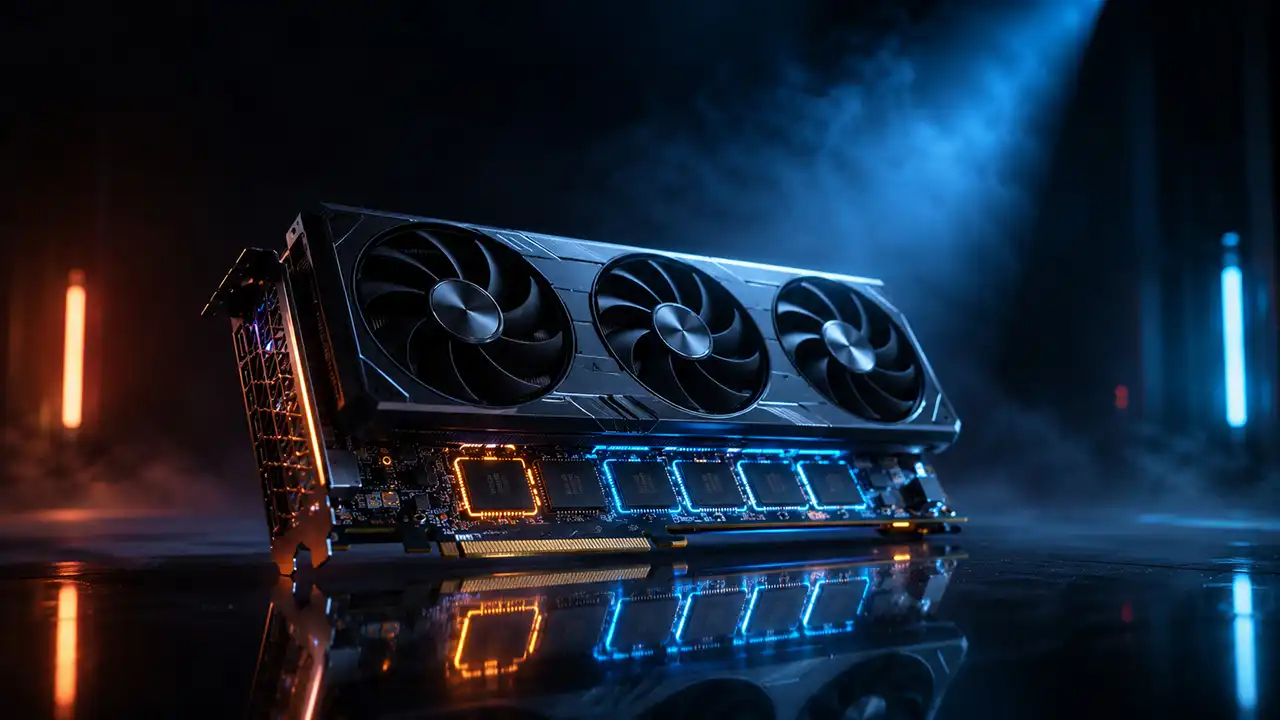
If you are shopping for a graphics card in 2026, one question keeps coming up: is 8GB VRAM still enough for modern PC gaming? A few years ago, 8GB felt like the sweet spot for mainstream GPUs. Today, that answer is more complicated.
Modern PC games look better than ever, but they also ask for more from your hardware. Higher-resolution textures, larger open worlds, ray tracing, and modern game engines all put extra pressure on GPU memory requirements. That has turned VRAM from a spec that many people ignored into one of the most important parts of buying a graphics card.
The short version is simple: 8GB VRAM is still usable, but it is no longer comfortable for every type of player. If you mostly play esports games at 1080p, 8GB can still do the job. If you want to play the latest AAA games with ultra textures, ray tracing, or 1440p settings, 8GB starts to feel like a limit instead of a safe baseline.
This guide breaks down where 8GB still works, where it struggles, and whether moving to 12GB or more is the smarter choice for modern gaming.
Why VRAM Matters More Than Ever
VRAM, or video memory, is where your graphics card stores visual data that needs to be accessed quickly. That includes textures, geometry, shadows, frame buffers, lighting data, and ray tracing information. The more detailed a game becomes, the more VRAM it can consume.
This is why VRAM requirements for modern games have increased so much. Today’s titles are not just aiming for good-looking character models. They are trying to fill massive environments with dense assets, realistic lighting, and high-resolution texture packs. Even when your GPU has enough raw power, insufficient VRAM can still create problems.
When a game runs out of available video memory, the result is not always an instant crash. More often, you see:
- texture pop-in
- blurry asset loading
- inconsistent frame pacing
- sudden stutters
- lower minimum frame rates
- settings that need to be reduced to stay stable
For many players, this is why the discussion around 8GB VRAM in 2026 matters so much. It is no longer just about average FPS. It is about smoothness, stability, and visual consistency.
Is 8GB VRAM Enough for 1080p Gaming?
For a lot of people, the answer is still yes. If your main target is 1080p, 8GB VRAM remains viable in many current games, especially if you are willing to use high settings instead of maxed-out presets.
This is particularly true in competitive titles such as:
- Counter-Strike 2
- Valorant
- Fortnite
- Apex Legends
- Rainbow Six Siege
These games are designed to run well on a wide range of systems, and they usually do not push 1080p gaming VRAM needs too far. In that use case, 8GB is more than enough.
The situation changes with modern AAA releases. Many recent games can still run well at 1080p on an 8GB card, but often only if you make smart compromises:
- use high textures instead of ultra
- lower ray tracing settings or disable them
- avoid heavy texture packs
- rely on upscaling like DLSS or FSR when needed
So if you are asking how much VRAM do you need for gaming at 1080p, the practical answer is this: 8GB is still acceptable, but it is becoming the minimum rather than the recommended target.
Where 8GB Starts to Struggle
The biggest problem with 8GB is not that it suddenly becomes useless. The problem is that it leaves less room for the future.
Modern game design trends are moving in a direction that naturally increases memory demand:
- larger worlds
- sharper textures
- better lighting systems
- more detailed effects
- more aggressive asset streaming
This is why AAA games VRAM usage has become such a hot topic. A game may launch and run on 8GB hardware, but it might require lower textures or more aggressive compromises than many players expect.
That matters because user expectations have changed too. Most buyers are not spending money on a new GPU just for this month. They want something that feels good for the next several years. In that context, 8GB is harder to recommend as a long-term investment.
1440p Gaming VRAM Needs Are Much Higher
This is where the debate gets more serious. At 1440p, games need to handle larger frame buffers, higher texture demands, and more memory-intensive visual data. That means 1440p gaming VRAM requirements are far less forgiving than 1080p.
An 8GB card can still run many games at 1440p, but it often depends on the title and the settings. In less demanding games, performance can remain solid. In newer blockbuster releases, however, 8GB may force you to lower textures, reduce shadow quality, or turn off advanced effects just to avoid stuttering.
This is where the 8GB vs 12GB VRAM discussion becomes especially important. At 1440p, 12GB gives you more breathing room for:
- higher texture quality
- better minimum frame rates
- smoother open-world traversal
- more stable performance in demanding scenes
If your goal is to play major new releases at 1440p for the next few years, 8GB no longer feels ideal. It feels restrictive.
Ray Tracing Pushes 8GB Even Harder
Ray tracing changes the equation significantly. It improves reflections, shadows, and lighting, but it also increases memory demand. That makes ray tracing VRAM usage one of the most important parts of this conversation.
Why does ray tracing use more VRAM?
- more lighting data needs to be stored
- acceleration structures add memory overhead
- reflections and shadows require more detailed scene information
- higher-quality effects increase overall memory pressure
An 8GB card can still use ray tracing in some games, especially at 1080p with balanced settings. But if you want ray tracing and ultra textures together, 8GB often becomes a bottleneck quickly.
This is why many gamers feel disappointed when a GPU has enough raw rendering power on paper but still struggles in real-world ray-traced workloads. The issue is often not just GPU speed. It is memory capacity.
Why Newer Games Keep Demanding More VRAM
Part of the answer comes from modern game engines. New technologies improve visual quality, but they also raise baseline memory use. Larger worlds, more detailed assets, and more advanced lighting all contribute to rising GPU memory requirements.
Open-world games are a major reason for this trend. They need to constantly stream in environments, textures, characters, and effects while you move through the world. If VRAM is limited, the game has less room to do that efficiently.
This helps explain why 8GB can still look fine in one title and feel frustrating in another. Optimization matters, but so does game design. Some experiences are simply more memory-hungry by nature.
8GB vs 12GB VRAM: Which One Makes More Sense Today?
For buyers building or upgrading a PC in 2026, this is the real question. Not whether 8GB can still run games, but whether it is still the smart choice.
Choose 8GB if:
- you mostly play esports or older titles
- you game primarily at 1080p
- you are working with a strict budget
- you are comfortable adjusting settings manually
Choose 12GB or more if:
- you want better longevity
- you play modern AAA games regularly
- you care about 1440p performance
- you want to use ray tracing more often
- you do not want texture settings to be your first compromise
The 8GB vs 12GB VRAM gap is not always about massive average FPS gains. Often, it is about a better overall experience. More VRAM can mean fewer stutters, fewer compromises, and less frustration over time.
Is 8GB VRAM Future-Proof?
Realistically, no. It is still functional, but it is not what most people would call future-proof GPU memory anymore.
If you already own an 8GB graphics card, that does not mean you need to panic or upgrade immediately. Many players will still get good results, especially at 1080p. But if you are buying a new GPU now and want it to age well, 8GB is harder to justify unless the price is especially attractive.
For new buyers, the smarter approach is simple:
- 1080p budget gaming: 8GB can still work
- 1080p high settings with longer lifespan in mind: 12GB is safer
- 1440p modern gaming: 12GB should be the target
- long-term comfort and heavier visual features: more than 12GB is even better
That is the real shift in 2026. 8GB has moved from sweet spot to baseline.
Final Verdict
So, is 8GB VRAM still enough for modern PC gaming? Yes, but only in the right context.
For esports games and many 1080p experiences, 8GB still makes sense. It can deliver solid performance and good value, especially if you are willing to avoid ultra textures and heavy ray tracing. But for modern AAA games, 1440p targets, and long-term buying decisions, 8GB is no longer the comfortable recommendation it once was.
If you already own an 8GB GPU, you can still get plenty of life out of it with sensible settings. If you are buying new, though, 12GB or more is the smarter move for anyone who wants a smoother, more future-ready experience.
In other words, 8GB VRAM is not dead. It is just no longer enough for everyone.
FAQ
Is 8GB VRAM enough for modern gaming in 2026?
Yes, for many 1080p games and esports titles, 8GB VRAM is still enough. For newer AAA games, 1440p, and ray tracing, it is becoming more limiting.
Is 8GB VRAM enough for AAA games?
It can be enough for AAA games at 1080p with optimized settings. However, ultra textures and advanced effects may push past comfortable limits.
How much VRAM do you need for 1080p gaming?
For most players, 8GB is still workable at 1080p. If you want more headroom for future games, 10GB to 12GB is the safer range.
How much VRAM do you need for 1440p gaming?
For modern 1440p gaming, 12GB is the better target. It offers more room for high textures, demanding effects, and better long-term usability.
Does ray tracing require more VRAM?
Yes. Ray tracing increases memory usage because it adds more lighting, reflection, and scene data that the GPU must process.
Should I upgrade from an 8GB GPU?
If you mainly play at 1080p and your current performance is fine, you may not need an immediate upgrade. If you want better 1440p performance or fewer compromises in new AAA games, upgrading makes sense.