
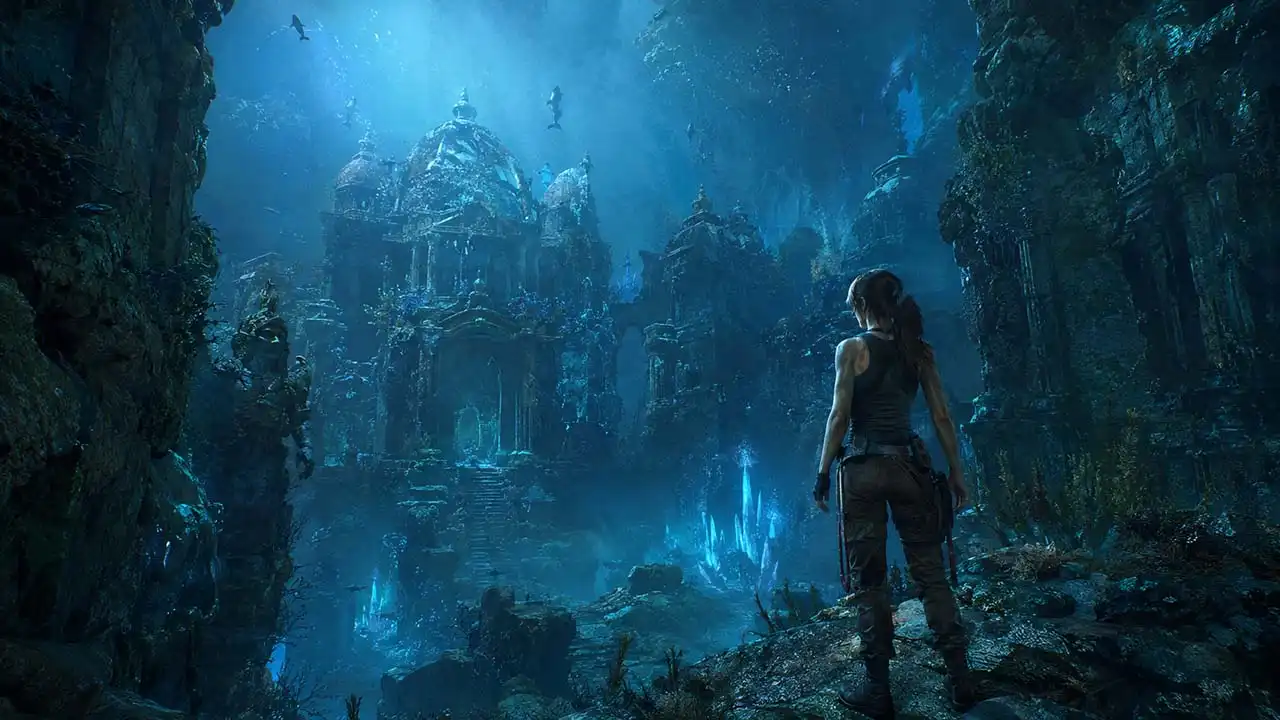
After years of speculation, Crystal Dynamics is finally preparing the next major Tomb Raider adventure. Early details suggest that Tomb Raider: Legacy of Atlantis could become one of the most ambitious entries in the franchise — combining modern technology with classic Tomb Raider mythology.
Although the developers have not revealed everything yet, several key details about Tomb Raider Legacy of Atlantis have already surfaced, including hints about the story, gameplay direction, engine technology, and possible release timeline.
Here’s everything we currently know about the upcoming Tomb Raider: Legacy of Atlantis.
A New Chapter for Lara Croft
The upcoming Tomb Raider: Legacy of Atlantis is expected to continue the timeline established by the Survivor Trilogy:
- Tomb Raider (2013)
- Rise of the Tomb Raider
- Shadow of the Tomb Raider
However, Crystal Dynamics has confirmed that the next Tomb Raider game will unify the reboot timeline with elements from the classic Lara Croft era.
This means fans may finally see a version of Lara Croft who is:
- Experienced
- Confident
- Fully established as a legendary explorer
That evolution could make Tomb Raider Legacy of Atlantis feel closer to classic Tomb Raider adventures while maintaining the modern storytelling style introduced in the reboot.
Tomb Raider Legacy of Atlantis Release Date
One of the most common questions players ask is about the Tomb Raider Legacy of Atlantis release date.
At the moment, the developers have not announced an official launch window. However, based on current development timelines and industry reports, the game is widely expected to release sometime in 2026.
AAA titles built with modern engines typically require long development cycles, especially when studios aim to create large exploration environments and cinematic storytelling.
Because Tomb Raider: Legacy of Atlantis is being developed with Unreal Engine 5, expectations for scale and visual quality are especially high.
Unreal Engine 5 and Visual Improvements
Crystal Dynamics confirmed that the next Tomb Raider game will use Unreal Engine 5, a powerful engine designed for next‑generation visuals.
This technology could significantly improve:
- Environmental detail
- Dynamic lighting
- Realistic character animation
- Massive world environments
Features like Nanite geometry and Lumen lighting allow developers to create incredibly detailed ruins, caves, and jungle environments — all elements that have always been central to the Tomb Raider experience.
For a game focused on ancient civilizations like Atlantis, Unreal Engine 5 could deliver some of the most visually impressive tomb environments in the series.
Gameplay: What Could Change?
Although gameplay footage has not been officially revealed, several industry insiders suggest that Tomb Raider Legacy of Atlantis gameplay may expand beyond the formula used in the Survivor Trilogy.
Possible improvements include:
- Larger semi‑open exploration areas
- More complex tomb puzzles
- Expanded climbing and traversal mechanics
- Improved stealth and combat systems
If these changes are implemented, the new Tomb Raider game could feel more open and adventurous while still maintaining the puzzle‑focused gameplay that fans expect.
Story: The Mystery of Atlantis
The title Legacy of Atlantis strongly hints that the story may revolve around the legendary lost civilization.
Atlantis has appeared in Tomb Raider lore before, especially in earlier classic titles. Revisiting this mythology could allow the developers to explore themes such as:
- ancient advanced civilizations
- forgotten technologies
- underwater exploration
- hidden ruins beneath oceans or deep caves
Combining mythology with Lara Croft’s archaeological expertise could create one of the most intriguing stories in the franchise.
Expected Platforms
Although the official Tomb Raider Legacy of Atlantis platforms have not been confirmed, the game will likely launch on:
- PlayStation 5
- Xbox Series X | S
- PC
Given its use of Unreal Engine 5, a release on older consoles such as PlayStation 4 or Xbox One is considered unlikely.
Why This Game Matters for the Franchise
The Tomb Raider series has evolved significantly over the last decade.
The Survivor Trilogy focused on Lara Croft’s origins and transformation into an adventurer. With Tomb Raider: Legacy of Atlantis, the franchise appears ready to move forward into a new phase.
This game could represent:
- the first fully next‑gen Tomb Raider experience
- a bridge between classic and modern Lara Croft
- a technological leap using Unreal Engine 5
If successful, Tomb Raider Legacy of Atlantis could redefine the future of the franchise.
Final Thoughts
Even though many details about Tomb Raider: Legacy of Atlantis remain secret, the available information already suggests a promising future for the series.
Between Unreal Engine 5 technology, a potential Atlantis‑focused storyline, and the return of a more experienced Lara Croft, the upcoming Tomb Raider game could become one of the most important action‑adventure releases of the next few years.
As more official announcements arrive, fans will finally get a clearer picture of what Tomb Raider Legacy of Atlantis truly has in store.
FAQ
1. When is Tomb Raider: Legacy of Atlantis expected to release?
Although Crystal Dynamics has not confirmed an official release date yet, industry reports suggest that Tomb Raider: Legacy of Atlantis could launch sometime in 2026. The game is being developed using Unreal Engine 5, which typically requires longer production timelines for AAA titles.
2. What gameplay features could Tomb Raider: Legacy of Atlantis include?
While gameplay has not been officially revealed, Tomb Raider Legacy of Atlantis gameplay is expected to expand exploration with larger environments, deeper puzzle systems, improved traversal mechanics, and more advanced combat options.
3. Which platforms will Tomb Raider: Legacy of Atlantis release on?
The new Tomb Raider game is expected to launch on PlayStation 5, Xbox Series X|S, and PC. Because it uses Unreal Engine 5, a release on older consoles like PS4 or Xbox One is considered unlikely.